The Timeless Power of Pilates: A Deep Dive into Classical Pilates
Pilates has become a widely embraced practice, valued for its ability to strengthen the body, improve posture and support both physical and mental wellbeing. Yet at its core, Classical Pilates remains a deeply precise and intentional method.
As the practice continues to gain popularity, there is growing interest in returning to its original principles and understanding what makes the classical method so effective.
To mark International Pilates Day, the founder of Exhale Pilates, Gaby Noble, shares her insights into Classical Pilates, its foundations and why this timeless method continues to transform the way we move and feel in our bodies…
Edited by Victoria Smart
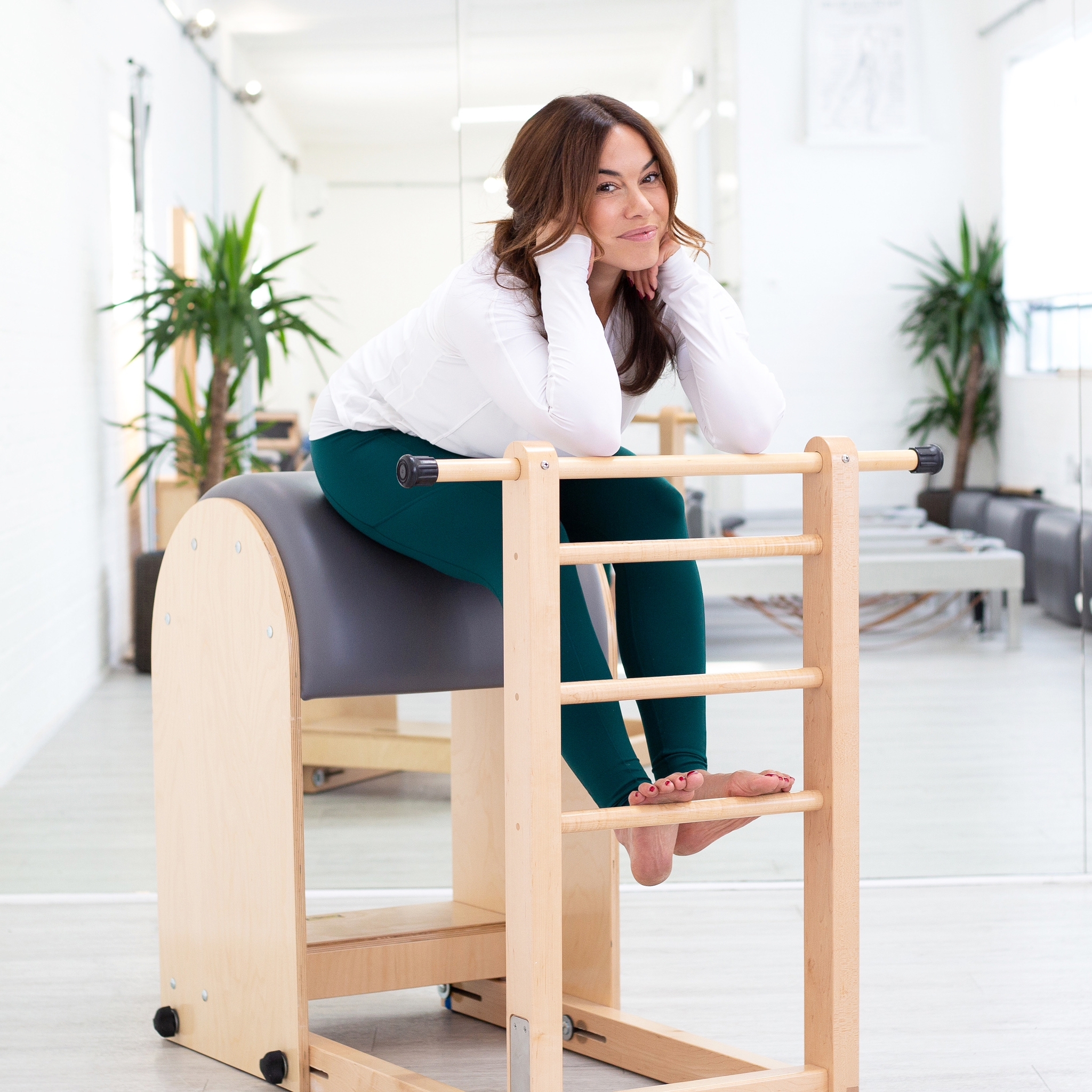
As the founder of Exhale Pilates, how would you describe the essence of Classical Pilates in its purest form?
Classical Pilates is an intelligent system of movement. It follows a clear method designed to empower the body and mind through control, precision and fluidity.
At its core, it is functional training – designed to support how the body moves in everyday life. It is not about layering more exercises for complexity but instead refining the way we move and developing a deeper connection between body and mind.
Can you explain the origin of Classical Pilates, which is also known as ‘Contrology’?
Pilates was developed by Joseph Pilates, who originally named his method Contrology. Having experienced illness as a child, including asthma, he became deeply interested in strengthening the body and improving breath through movement.
Classical Pilates was created as a complete system, not a collection of isolated exercises. Drawing inspiration from the movement patterns of babies and animals, he created a method rooted in coordination, control and continuous flow.
The system follows a structured sequence across both mat work and the Reformer, designed to condition the entire body. However, the sequence is not rigid – it requires thoughtful adaptation as not every exercise suits every body at every stage. This is where skilled teaching becomes essential.
The sequence is only one layer. Progression is not about increasing complexity, but about deepening understanding over time. The longer you practice, the more challenging it becomes because awareness increases – what once felt simple becomes highly refined and the foundational work often becomes the most demanding.
What originally drew you to Classical Pilates? How has your relationship with the method evolved over time?
I originally came to Pilates after years of adrenaline-fuelled intense training and hypermobility. I was encouraged to try Classical Pilates to reconnect with my body and very quickly experienced the power of the method.
After a car accident, I chose to complete my teacher training, not with the intention of teaching at first but to better understand my own body and how to move with greater control. That experience completely changed my relationship with movement – I fell in love with the method and its impact.
Fast forward to now, we have three studios and I feel incredibly grateful to share this work through Exhale with my team. We work with a variety of clients, some recovering from serious injury and stroke, some elite athletes returning to sport and some super models preparing for the runway. What I love about Classical Pilates is that it meets every body where it is.
How does Classical Pilates differ from more contemporary or modern interpretations of the practice?
The most important distinction is not simply classical versus contemporary, but understanding what Pilates actually is.
Pilates today is often a diluted term, as it is unregulated and used across many different styles and formats – such as high-intensity classes or sculpt classes, which diverge from the original philosophy of Pilates. Classical Pilates, however, is a defined system with a clear methodology.
In Classical work we observe the body in front of us to determine what it needs, rather than following exercises with no clear pathway. We teach movement from a strong centre -which is why the apparatus uses structured resistance to support the body. The focus is always on initiating movement from the core, with the extremities responding as a result – not the other way around.
It is also important to understand that Classical Pilates is not driven by aesthetics. It builds deep foundational strength and long lasting change in the way the body functions.
What are the key principles you focus on when teaching Classical Pilates at Exhale Pilates?
Most importantly we focus on the individual body in front of us. It is never about how the practice looks – it is about how it feels, and whether the movement can translate and be functional in everyday life.
There are six widely referenced principles in Pilates: breath, concentration, control, centring, precision and flow. These were not originally defined by Joseph Pilates himself, but later introduced to help articulate and teach the method more clearly.
They describe the quality of movement rather than the movement itself, emphasising how the body should work rather than simply what it is doing. Ultimately they all point back to the same foundation: intelligent, whole-body movement performed with awareness, control and continuity.
At Exhale our goal is simple. We want people to leave with strong foundations that support how they live – whether they are parents, professionals or athletes. It is never about appearance; it is about moving with function and purpose.
Can you give an overview of the apparatus used in the Classical Pilates system?
The apparatus was designed by Joseph Pilates to support and challenge the body in very specific ways. The Reformer, Cadillac, Wunda Chair and Barrels all serve distinct roles within the system – providing resistance, feedback and support to make the work both adaptable and progressive.
At Exhale, we use the original dimensions and principles Joseph Pilates designed. The equipment is intentionally structured – strong springs and no colour coding – because the goal is to train the body to move from a strong centre rather than relying on the extremities.
Each apparatus provides different feedback to the body. What someone may not feel on one piece of equipment, they may suddenly understand on another. This variation is intentional and it is what allows the system to teach the body in multiple dimensions.
For someone completely new to Pilates, what benefits can they expect to feel both physically and mentally from the Classical method?
Physically, most people feel stronger, more supported, more aligned and more connected to their bodies – often from the very first session.
Mentally, there is often a sense of calm and clarity. Because the work requires full concentration, it quiets external noise. At Exhale, we don’t play music in the studio for this reason – the focus is entirely internal.
Over time clients often describe feeling more empowered in their bodies and stronger than they’ve ever felt before – which gives them a confidence that goes beyond the aesthetic.
What misconceptions do you often hear about Classical Pilates, and how do you address them?
A common misconception is that Pilates is too rigid or repetitive. In reality, when it is taught properly, with a teacher that has been trained in the full comprehensive system – not simply incorporating Classical Pilates exercises – it is deeply challenging because as awareness increases the work becomes more nuanced, not less.
How do you see the practice of Pilates supporting longevity and overall wellbeing across different stages of life?
Pilates supports the body in a sustainable way. It builds strength, mobility and awareness, allowing people to continue moving well as they age.
When the body is imbalanced or in pain it affects posture, energy and internal function. Over time poor alignment can place unnecessary compression on the body and impact how efficiently it operates.
Finally, what do you hope more people come to understand or appreciate about Classical Pilates?
That it is a system, not a trend and far beyond just reformer and mat.
When taught and practised with integrity, it has the ability to change how people feel in their bodies – not just in the studio, but in everyday life. It does not need to be overcomplicated.
If people are curious about Pilates I would say: try it and feel it. You never know, you might get hooked – like so many of our clients do!
If you want to have a little look around Exhale, explore our event, The Power of Pilates here…